|
The Factory of The Future
|
|
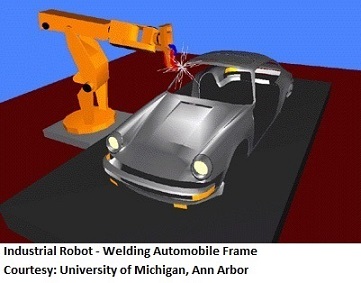
In the 1980s, this was a dream. Back then, some concepts
of this were already in action - use of industrial robots
for welding, spray painting,
AGV
for assembly, material transfer and so on. They were due
to the fact that industrial robots perform welding
of complex contours without use of welding masks and can
operate using heat shields. Also spray painting creates
fumes that are hazardous to humans and can be best done
by robots. Further robots perform without fatigue for
hours on end.
|
| |
|
| |
|
With advances in chip design and
computing power,
in 2025 and beyond,
it is Factory of The Present. There
are several videos of automotive manufacturing companies
that have made this is a reality.
|
| |
|
High level steps in advanced automation - Automotive Manufacturing
|
- Sales demand model is created by analysis of monthly sales
- MRP
is performed at a high level
- Bill of Materials is generated for material and parts for each car
- Lead time analysis of materials is generated based on available data
- JIT Inventory
model is created - for optimum inventory maintenance and cash flow
- Vendor supply lead time data is analyzed and vendors are chosen
to adhere to JIT manufacturing standards
- Purchase Orders are created for each vendor with designated
delivery dates
- AGV and robotic systems are synchronized with material arrival
date and times
- Parts upon arrival are inspected for defects by robots
- Good parts are autonomously tagged and transferred to
manufacturing locations
- Industrial robots start parts manufacturing in specific order
and AGVs transfer them to next machines
- Step by step manufacturing gets completed with minimum human
intervention
- Inspection is performed by
laser
enabled robots, electronic devices and gauges
- Final assembly is completed by robots and with assistance
from human employees
- Performance tests are conducted in test zones and
analysis for defects are performed by robots
- Completed vehicle is transferred to shipment zone
- Each vehicle is tagged for shipment to specific company
- Delivery schedule is created for shipment of completed
vehicles
- Vendors are scheduled to pick up vehicles at specific
times and factory location
- Pick up times are recorded and arrival times sent to
destination
|
| |
|
The steps highlighted above are at very high-level. There
will be enormous steps occuring at each level. Data gets
created, AI is used to generate answers using created data
or historic data, make decisions on an ongoing basis.
If there are assembly-line stoppages or other issues, then
AI does a
RCA
and come up with solutions. Humans will take over when
critical failures occur and there will be instantaneous
alerting of such situations. As we go on,
in future the repetitive human tasks gets taken over
humanoid robots, similar to the one shown below. In
early 2026, these humanoid robots are in training to
mimic repetitive human tasks. It is only a matter of
time, the humanoids will be running the - Factory of
The Future.
|
| |
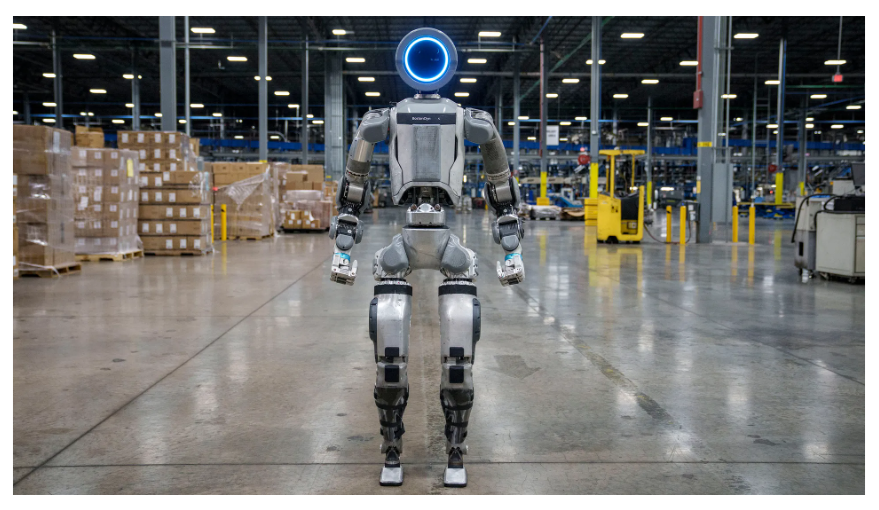
Humanoid Robot In Warehouse Setting [Courtesy: Boston Dynamics]
|